I recently read two books, "The Tyranny of E-mail", by John Freeman and "The Case for Books: Past, Present and Future" by Robert Darnton. Both deal with the huge changes in how we share information currently, and how they affect the way we learn and connect. I have written previously about the influence of cell phones on the plots of movies and stories, but now would like to look at digitization and its effect on reading and libraries.
The book as we know it, or codex, has been pronounced "dead" many times. We all do a tremendous amount of reading on-line, so that looms as a possibility. However, even Bill Gates has said: "Reading off the screen is still vastly inferior to reading off paper. Even, I who have these expensive screens and fancy myself as a pioneer of this Web Lifestyle, when it comes to something over about four or five pages, I print it out and I like to have it to carry around with me and annotate....."
The much-talked-about project, potentially full of pitfalls, which the libraries and world in general are watching, is Google's mammoth digitization project. The claim to 100% of texts is exaggerated. As Darnton says, some very valuable writing could be in the percent not included for a variety of reasons. Materials from five great American libraries will be used, but this doesn't come close to the material in all such institutions.
Another crucial issue revolves around copyright infringement. It currently extends to the author's life plus seventy years. Google can display only part of the text for those still under copyright. Also likely is that Google may make mistakes, skip pages, blur images. There are no guarantees that the format will last forever either. Bits can deteriorate, hardware and software go out of date, as may even encoding.
Finally, even if the copy is totally accurate, there are characteristics of a book that cannot be captured. The very act of HOLDING a book has aspects that appeal to readers like: size, texture, smell, quality of printing, clarity of illustrations. These physical attributes reflect its history in a specific culture and place, not even mentioning fascinating notes left in the margins.
To be avoided, and librarians are in the forefront of this protest, is the "monopoly of access to information." According to Darnton, "Anyone who commands the portals to digital data can act as a toll collector, making you pay to enter the information highway." In Google's case it can charge whatever it wants in the future. A scary thought indeed.
Tuesday, November 3, 2009


Thursday, September 3, 2009
JUDIE'S FALL FAVORITE AUTHOR PICKS
Herewith a list of hot titles coming out in the next few months, traditionally a really prolific publishing time. (A note: see the Paws & Claws blog "Homer's Odyssey" for my absolute favorite.)
September-Brown, Dan LOST SYMBOL- All that is known at this time is that the hero is Dan Langdon and it takes place over a 12 hour period. (9/3/09). Very hush hush......
Doctorow, E.L. HOMER & LANGLEY-Through the eyes of the infamous hoarder Collyer brothers we travel from the early 20th century through the 1980's. The two men wall themselves off from the changing world in their Harlem brownstone, surrounding themselves with old newspapers, musical instruments and other curiosities.
Shreve, Anita A CHANGE IN ALTITUDE-Geraldine had only planned on staying in Kenya for a year, when she traveled there with her husband. A horrific accident while on a climbing expedition changes their marriage forever.
October- Cornwell, P. THE SCARPETTA FACTOR-Dr. Kay Scarpetta is working in New York City, and must face a threat on her life , as well as deal with a famous actor accused of a sex crime.
Crichton, Michael PIRATE LATITUDES-On Jamaica, Capt. Edward Hunter assembles a crew to seize gold from a Spanish galleon. (Crichton has left the dinosaurs for now.)
Mayle, Peter THE VINTAGE CAPER-Los Angeles entertainment lawyer Danny Roth finds himself the victim of a world-class heist when his vintage wine collection disappears. (He's now setting his works outside of France, but still loves vino.)
November-Grafton, S U IS FOR UNDERTOW- almost to the end of the alphabet now-Kinsey Milhone helps a man who thinks he remembers where a young girl is buried, who had died 21 years before. He hopes if they find the body, they can find the murderer-----and justice will be served.
McCullough, Colleen-TOO MANY MURDERS-Not "The Thorn Birds", but an interesting tale of multiple murders in small-town Connecticut, none of which seem to be connected in any way.
Roth, P THE HUMBLING-A leading stage actor feels his life is over---talent faded, wife left. He is about to take a journey that would have a dark and shocking end.
Rutherfurd, Edward- NEW YORK (THE NOVEL)-As he wrote in "Sarum" and others, the author traces the history of a single place through the people who settled it and their descendents. They include a varied lot: Dutch, English, slaves, Irish immigrants, robber barons, and a family who fled anti-semitism in Europe. It culminates with the World Trade Center attacks.
September-Brown, Dan LOST SYMBOL- All that is known at this time is that the hero is Dan Langdon and it takes place over a 12 hour period. (9/3/09). Very hush hush......
Doctorow, E.L. HOMER & LANGLEY-Through the eyes of the infamous hoarder Collyer brothers we travel from the early 20th century through the 1980's. The two men wall themselves off from the changing world in their Harlem brownstone, surrounding themselves with old newspapers, musical instruments and other curiosities.
Shreve, Anita A CHANGE IN ALTITUDE-Geraldine had only planned on staying in Kenya for a year, when she traveled there with her husband. A horrific accident while on a climbing expedition changes their marriage forever.
October- Cornwell, P. THE SCARPETTA FACTOR-Dr. Kay Scarpetta is working in New York City, and must face a threat on her life , as well as deal with a famous actor accused of a sex crime.
Crichton, Michael PIRATE LATITUDES-On Jamaica, Capt. Edward Hunter assembles a crew to seize gold from a Spanish galleon. (Crichton has left the dinosaurs for now.)
Mayle, Peter THE VINTAGE CAPER-Los Angeles entertainment lawyer Danny Roth finds himself the victim of a world-class heist when his vintage wine collection disappears. (He's now setting his works outside of France, but still loves vino.)
November-Grafton, S U IS FOR UNDERTOW- almost to the end of the alphabet now-Kinsey Milhone helps a man who thinks he remembers where a young girl is buried, who had died 21 years before. He hopes if they find the body, they can find the murderer-----and justice will be served.
McCullough, Colleen-TOO MANY MURDERS-Not "The Thorn Birds", but an interesting tale of multiple murders in small-town Connecticut, none of which seem to be connected in any way.
Roth, P THE HUMBLING-A leading stage actor feels his life is over---talent faded, wife left. He is about to take a journey that would have a dark and shocking end.
Rutherfurd, Edward- NEW YORK (THE NOVEL)-As he wrote in "Sarum" and others, the author traces the history of a single place through the people who settled it and their descendents. They include a varied lot: Dutch, English, slaves, Irish immigrants, robber barons, and a family who fled anti-semitism in Europe. It culminates with the World Trade Center attacks.
Monday, June 22, 2009
Epistolary novels--Letters become Stories
In my recent e-zine about cellphones, I complained that electronic devices seem to be dictating the pace and plot of too many contemporary films and books-speeding up the action to the point of ruining the suspense. Slowly developing plots seem to be doomed by the constant availability of connection. After viewing a BBC production of that Russian tome "Anna Karenina", I was reminded of this rant because Tolstoy has the twists and turns of the story proceed at a snail's pace. Communication, when not face-to-face, was entirely in written correspondence, letters and notes being the primary means of connecting over distances among the educated classes in the nineteeth century.
So, I decided to look into stories written either partially, or totally, in letter form, the so-called "epistolary"novels. Historically, it became popular as a genre in the eighteenth century in the much-read books of Samuel Richardson, Montesquieu, Rousseau, and even Goethe.
The form declined in popularity gradually, but traces of the use of writing to forward the plot may be seen in such well-known mysteries as Wilkie Collins' "The Moonstone". Published originally in 1868, readers were intrigued by one character's writing used to preserve his family's reputation. In a less-well known work, with a clever title, Kathrine Tayor uses the postal designation "Address Unknown" to provide the plot with the information that a letter could not be delivered, and thus the fact that a character had disappeared or died.
An extraordinarily popular epistolary novel, published in the 1940's, was C.S. Lewis' "Screwtape Letters". Known world-wide as a theologian and author of the Narnia tales, the author uses humor to teach theological lessons about the moral compass which determines human behavior. The book is a collection of letters, supposedly written by a senior devil, Screwtape, to his nephew, Wormwood. His instructions to him regarding how to lure good people into sinning are psychological gold. Humans never change. His advice about romance: "Let them think they have solved by Love problems they have only postponed under the influence of the enchantment. While it lasts you have your chance to foment the problems in secret and render them chronic."
Elizabeth Hailey's "A Woman of Independent Means", 1978, was a lighter epistolary work, equally as popular and having a rich moral base, too. Beginning at the turn of the twentieth century, the reader has the opportunity to dip into the correspondence of a woman who learns to express who she really is, in spite of the pressures to conform during her lifetime. We share her joys and sorrows, watching her grow into a radiant human being.
These books are all worthy predecessors to two fabulous reads which have a lot in common. Word-of-mouth has propelled "The Guernsey Potato Peel and Literary Society" to the top of many lists. Its authors, Mary Ann Shaffer and Annie Barrows, share a lot with Helene Hanff, author of "84, Charing Cross Road". Both use letters to describe life in England, or the Channel Islands, during World War II. As we get to know the civilian population, we share in their deprivations and fears. We also realize how clever they are in finding ways to survive in times of unendurable crisis and worry.
The letters are obviously fictitious, but because they have such a personal form and tone, we immediately become involved with, and attached to, the characters. We feel like we're participating in the events along with them. What a rich storehouse of life experience!
Now for my concerns. Where are the letters going to come from for the next few generations? Everyone communicates by means of : email, cell phone, or twitter-all of which disappear. Family archives will have plenty of digital pictures, I suspect, but little verbal communication. What about the treasures of love letters or little thoughtful notes that paint a detailed picture of the older (which keeps changing) generation? If they never existed in hard copy, we'll never know what was thought or said. Computerized family trees are all the rage, but we'll be missing all the little pieces in between the big events of birth, marriage, death, etc. Too late we may realize that those tiny mosaic-like pieces may be where the real heart of the family lies......
So, I decided to look into stories written either partially, or totally, in letter form, the so-called "epistolary"novels. Historically, it became popular as a genre in the eighteenth century in the much-read books of Samuel Richardson, Montesquieu, Rousseau, and even Goethe.
The form declined in popularity gradually, but traces of the use of writing to forward the plot may be seen in such well-known mysteries as Wilkie Collins' "The Moonstone". Published originally in 1868, readers were intrigued by one character's writing used to preserve his family's reputation. In a less-well known work, with a clever title, Kathrine Tayor uses the postal designation "Address Unknown" to provide the plot with the information that a letter could not be delivered, and thus the fact that a character had disappeared or died.
An extraordinarily popular epistolary novel, published in the 1940's, was C.S. Lewis' "Screwtape Letters". Known world-wide as a theologian and author of the Narnia tales, the author uses humor to teach theological lessons about the moral compass which determines human behavior. The book is a collection of letters, supposedly written by a senior devil, Screwtape, to his nephew, Wormwood. His instructions to him regarding how to lure good people into sinning are psychological gold. Humans never change. His advice about romance: "Let them think they have solved by Love problems they have only postponed under the influence of the enchantment. While it lasts you have your chance to foment the problems in secret and render them chronic."
Elizabeth Hailey's "A Woman of Independent Means", 1978, was a lighter epistolary work, equally as popular and having a rich moral base, too. Beginning at the turn of the twentieth century, the reader has the opportunity to dip into the correspondence of a woman who learns to express who she really is, in spite of the pressures to conform during her lifetime. We share her joys and sorrows, watching her grow into a radiant human being.
These books are all worthy predecessors to two fabulous reads which have a lot in common. Word-of-mouth has propelled "The Guernsey Potato Peel and Literary Society" to the top of many lists. Its authors, Mary Ann Shaffer and Annie Barrows, share a lot with Helene Hanff, author of "84, Charing Cross Road". Both use letters to describe life in England, or the Channel Islands, during World War II. As we get to know the civilian population, we share in their deprivations and fears. We also realize how clever they are in finding ways to survive in times of unendurable crisis and worry.
The letters are obviously fictitious, but because they have such a personal form and tone, we immediately become involved with, and attached to, the characters. We feel like we're participating in the events along with them. What a rich storehouse of life experience!
Now for my concerns. Where are the letters going to come from for the next few generations? Everyone communicates by means of : email, cell phone, or twitter-all of which disappear. Family archives will have plenty of digital pictures, I suspect, but little verbal communication. What about the treasures of love letters or little thoughtful notes that paint a detailed picture of the older (which keeps changing) generation? If they never existed in hard copy, we'll never know what was thought or said. Computerized family trees are all the rage, but we'll be missing all the little pieces in between the big events of birth, marriage, death, etc. Too late we may realize that those tiny mosaic-like pieces may be where the real heart of the family lies......
Monday, May 11, 2009
BOOKS THAT MAKE YOU LAUGH, CHUCKLE, SNICKER, ETC.
 spense writing. The largest sub-division centers on cooking, including recipes, and inevitably—poisoning. Most popular among these are the ones by Diane Mott Davidson who wrote, for example, “Chopping Spree”. Joanna Fluke’s books always sound mouth watering, like her “Chocolate Chip Cookie Murder”. (She also has one giving equal time to sugar cookies.) The zaniest, however, are those by Tamar Myer: “Crepes of Wrath”, “Custard’s Last Stand”, and “Grape Expectations”. These books are filled with Pennsylvania Dutch cooking since the plots are centered in Mennonite/Amish country. Don’t be fooled by that word-these are laugh-out-loud books-rare indeed.
A recently published mystery, which received a lot of publicity, is “The Sweetness at the Bottom of the Bowl”, by Alan Bradley. Set in of Poe). This book is a stand-out because the heroine is not only unique in her insights and devotion to her family, but has a rare intuitive ability to see through hypocrisy. The humor, based on her internal monologues, is threaded throughout, subtle and ironic. Similar to this, is a new series by Laura Lutz, beginning with “The Spellman Files”. This family of detectives is more contemporary, but features young women who out-smart their elders at every turn as did Bradley’s. I especially liked the youngest, a tweeny, who simply outwits everyone, and cannot be reined in. In trying to analyze why I was laughing so hard, I realized it has a lot of the Poconos resort slapstick humor-sort of Rodney Dangerfield in a skirt!

When patrons are complaining about the state of the world, I often suggest the collected thoughts and writings of well-known comedians who sometimes really do have something to say that is worth reading. Dave Barry, Bill Cosby, Denis Leary, and even Best-Seller List Chelsea Handler fall into this category. Distracting and light-hearted-no one said it was great literature.
Collections of cartoon strips are next on my list for fun. A favorite is “Get Fuzzy” (available in the Boston Globe unless the paper folds) because the Shar Pei dog and Siamese cat really do capture a perverse range of human activity and mischance. Other animal strips famous for doing the same thing are:”Peanuts”, “Calvin and Hobbes” and “Pogo” (We have met the enemy and he is us!)


Finally, I have been amazed at the head-snapping switches from tragedy to comedy in many of the very popular long-running series on cable television. Locally, we are all fascinated by “Boston Legal” since James Spader is a summer resident here. His antics in and out of the courtroom leave the viewer not knowing whether to laugh or cry. Similarly, “Monk” uses the severe psychological problems of its detective to mine a whole range of emotions, much of the time happy ones. Both “Desperate Housewives” and “Nip/Tuck” take themselves seriously on one level, but much of the time the all-too human dilemmas provoke chuckles, or at least, tee-hees at the ridiculous plot developments. “Rescue Me”, Denis Leary’s zany, and sometimes deadly earnest portrayal of
After reading, or looking at, selections from any of these genres, I always feel more energetic and optimistic. Wasn’t it that odd little magazine “Reader’s Digest’ that had a section called “Laughter is the best medicine? “ I leave that for you to find out!
>To order these books and videos online visit SAILS.
Tuesday, April 14, 2009
CELL-PHONE-FREE BOOKS AND MOVIES
I came across an article in the New York Times the other day, which I had already "written" myself. Well, at least I had spoken all the same thoughts to my staff and any patron who would listen. As this 'zine's title implies, we purists are beginning to be upset with the influence of our ever-present electronic leashes on books and films being written and produced today. If the story-line takes place in contemporary times, it is assumed by the the reading/viewing audience that the characters can be in constant contact. So.....long-distance rarely leads to heart-break or mistaken interpretations of abandonment. (Picture Rick and Ilsa texting each other in Paris about their delays, and you realize that "Casablanca" would have a much different plot development-surely boring if it were taking place during the war in Iraq.) Indeed, contemporary stories must be twisted around so that the characters have absolutely no chance of having live wireless contact. (Even though Tom Hanks worked for hyper-tech FedEX, surely his cellphone wouldn't be able to contact even a passing ship before its water-logged batteries failed). Watch James Bond films and Ludlum's Bourne series to witness techie stuff affecting the plot with great success. Damsel in distress stories present a serious dilemma, however. On the one hand, it is reassuring to know that the heroine has a chance of escaping her pursuer while driving ninety miles an hour - or running through the woods -the stuff of wild humor in the "Scream" movies, for example. However, such questions as where are the cell towers and how does she keep re-charging the batteries do arise.... So, in action films we are ready to accept technology's influence on the plot and characters, but romance and tragedy- filled stories, not so much.
Wednesday, March 18, 2009
BOOKS YOU REALLY DON'T WANT TO READ
Watching the evening news or reading a newspaper is alarming enough. Why would anyone want to read MORE about our current seemingly dire circumstances—are you crazy? Well, I think well-researched , clearly written books really do books help the reader to understand much better the problems we’re all facing. In other words, rather than fueling anxiety, they are calming, restoring some sense of control over our circumstances by providing ideas for possible and probable solutions.
So, give some of these titles a try—particularly the ones about topics you’re not on top of, or those dealing with subjects you’d rather not contemplate at all. You just might finish one and feel a whole lot better!
Have you read one that I have missed, please feel free to post your suggestions, or send me an email, jkleven@sailsinc.org.
Tuesday, March 17, 2009
Hot, Flat, and Crowded
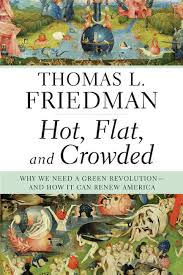
In HOT, FLAT AND CROWDED by Thomas Friedman, we read why we need a green revolution, and how it can renew America. >Order a copy through SAILS
Gusher of Lies

The dangerous delusions of "energy independence" by Robert Bryce in GUSHER OF LIES. >Order a copy through SAILS
Making War to Keep Peace

In MAKING WAR TO KEEP PEACE, Jeane J. Kirkpatrick asks is there ever a reliable when, where and how to use a military solution for world problems. >Order a copy through SAILS
Dumbest Generation

In the DUMBEST GENERATION Mark Bauerlein explains how the Digital Age stupefies young Americans and jeopardizes our future-don't trust anyone under 30. >Order a copy through SAILS
Bottlemania

BOTTLEMANIA, by Elizabeth Royte how water went on sale and how we bought it. >Order a copy through SAILS
What Happened

In Scott McClellans WHAT HAPPENED readers are taken inside the Bush White House and Washington's culture of deception.
Foreclosure of America

THE FORECLOSURE OF AMERICA by Adam Michaelson is the inside story of the rise and fall of Countrywide Home Loans and the default of the American dream. >Order this book through SAILS
Traffic
Tom Vanderbill, TRAFFIC, addresses why we drive the way we do and what it says about us. >Order a copy from SAILS
Dark Side

The DARK SIDE by Jane Mayer is the inside story of how the war on terror turned into a war on American ideals. >Order from Sails
Sunday, March 15, 2009
Sleepers
The first installment "Sleepers", includes some now very familiar titles which were once undiscovered, yet recognized by Judie for their literary appeal combined along with a few new titles which Judie predicts are the next must reads.
The Godfather
 The first title that I remember assigning to this category was THE GODFATHER. Yes, that amazingly popular book, movie series, etc. Back in the 1970's, however, few people had heard f Mario Puzo, the author. I remember ordering it for the Detroit Public Library as a novelized Mafia story, most probably very violent-perhaps a man's book. Well...After page one or two, I could not put it down, not matter if it had a convoluted plot with lots of characters-but what characters!!! >Order this book through SAILS
The Bridges of Madison County
 Another book with a history similar to Puzo's was THE BRIDGES OF MADISON COUNTY by Robert Waller. I ordered that title here in Marion as a good beach read. Romance, a wandering photographer, lonely farm wife...Its wonderful plot and characters were soon talked about everywhere and we had to order more copes. This fascination was only enhanced later on by the casting of Meryl Streep and Clint Eastwood as the leads in the movie. (I even had a call from a patron wondering if indeed the photographer did work for National Geographic). It was strictly fiction, but the characters were so life-like, one hoped they really had existed. >Order this book through SAILS
Still Alice
 Recently, I have just finished reading another book which is definitely a "Sleeper". STILL ALICE by Lisa Genova. It was originally self-published by the author, a professor at Harvard. It was later picked up by a publisher, and also any library patron who has talked to friends or librarians who have read it. Can't put it down...Basically it is the story of a very bight woman who teaches at Harvard, but who begins to lose her memory in devastating ways, finally being diagnosed with Alzheimer's disease. She chronicles this decline in heart-breaking detail.
One scene, early in the story, was quite riveting, and really summed u the under-lying terror she recounts. As an avid jogger, Alice continued with her routines in order to stay healthy as long as possible. One day, however, she ran into Cambridge, not far from her home, and stopped. As she describes it in detail, the reader freezes in horror, aware that any one of us could experience the same thing. She looks around and recognizes the shops and streets-can orient herself. However....She cannot remember how to get home from where she is. Should she turn right or left? The juxtaposition of the familiar with the Great Unknown is jarring beyond belief. >Order this book through SAILS
The Help
 Another new title that I categorize as a "sleeper" is THE HELP by Kathryn Stockett. It's a first novel, but this Southern writer really understands what she's observing. It takes place in the Deep South-Mississippi in the early 60's. The Civil Rights movement is just beginning to penetrate rigid social norms. The narrative shifts from the various maids working in upper middle class households to the young white woman looking at the stratified society in which she lives, with sadness and disdain. The plot gimmick is that she wants to write a book from the perspective of the servants because she is becoming increasingly aware that it is the y indeed who are running the households. Most of the white women are portrayed as selfish and vapid. Housework and the raising of the children are almost totally done by the so-called maids who show a much greater understanding of human psychology that their employers. (Much like the NANNY DIARIES depicted New York's upper classes.) Tension runs through the narrative because once the book is published white society most likely would wreak severe revenge on these women whose work is their sole means of support. Their children would literally starve. Even though aliases are used and the author is termed "Anonymous" all involved with this enterprise have taken tremendous risks just as others, like Ros Parks, were doing on a national scale. This novel pro trays the grass roots underpinnings of the big Civil Rights battles. There is no question that courage was at the heart of it all. >Reserve a copy at the Elizabeth Taber Library
Subscribe to:
Posts (Atom)

